Accelerator4Crafts Residency
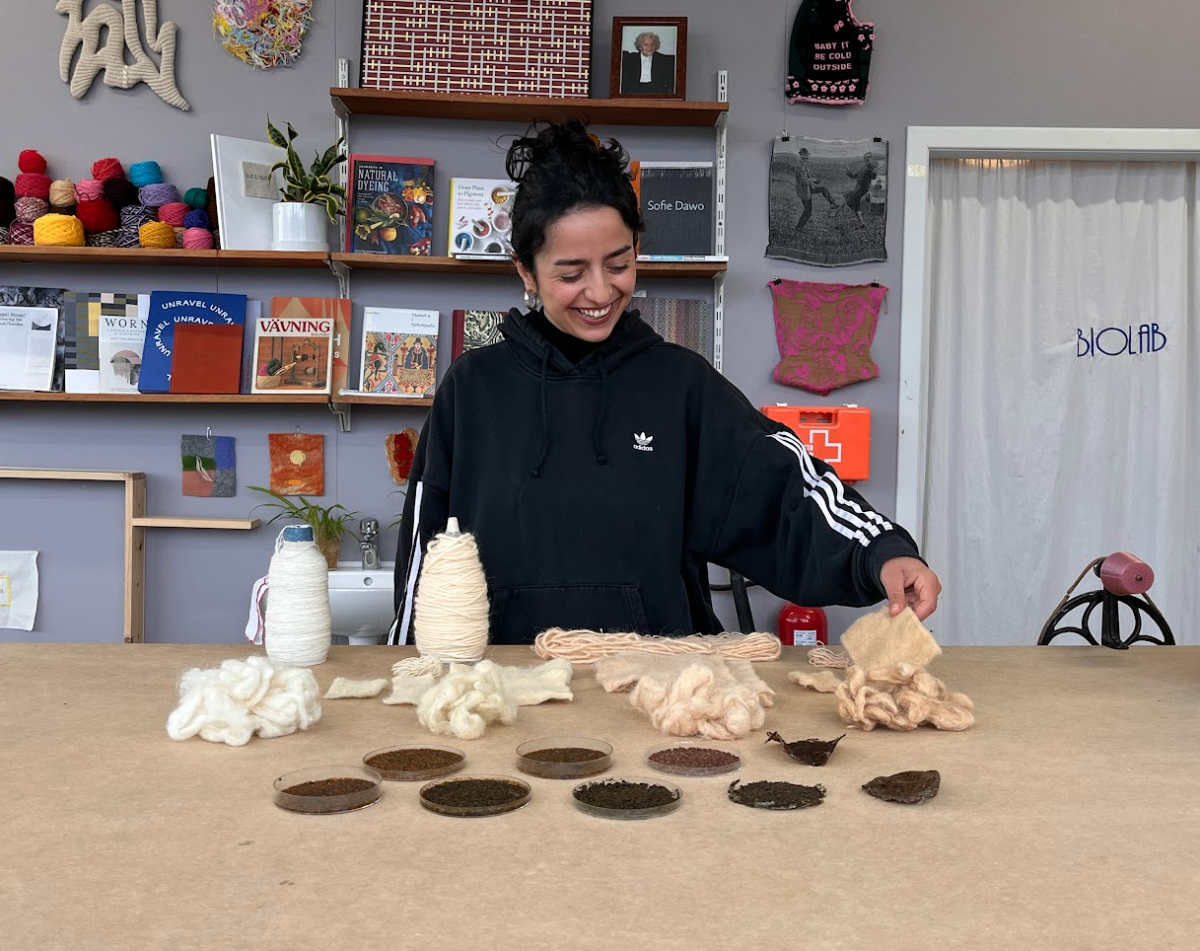
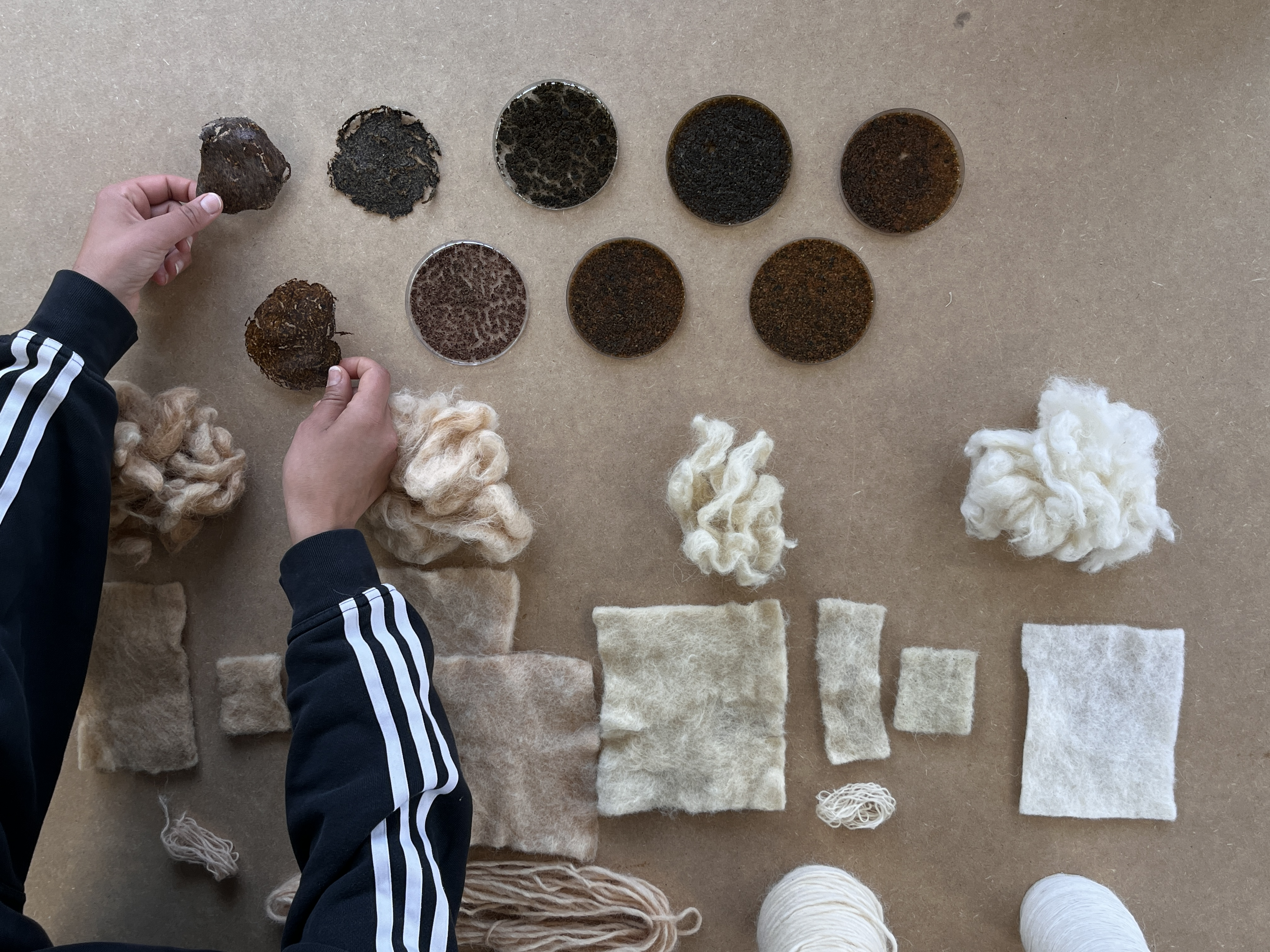
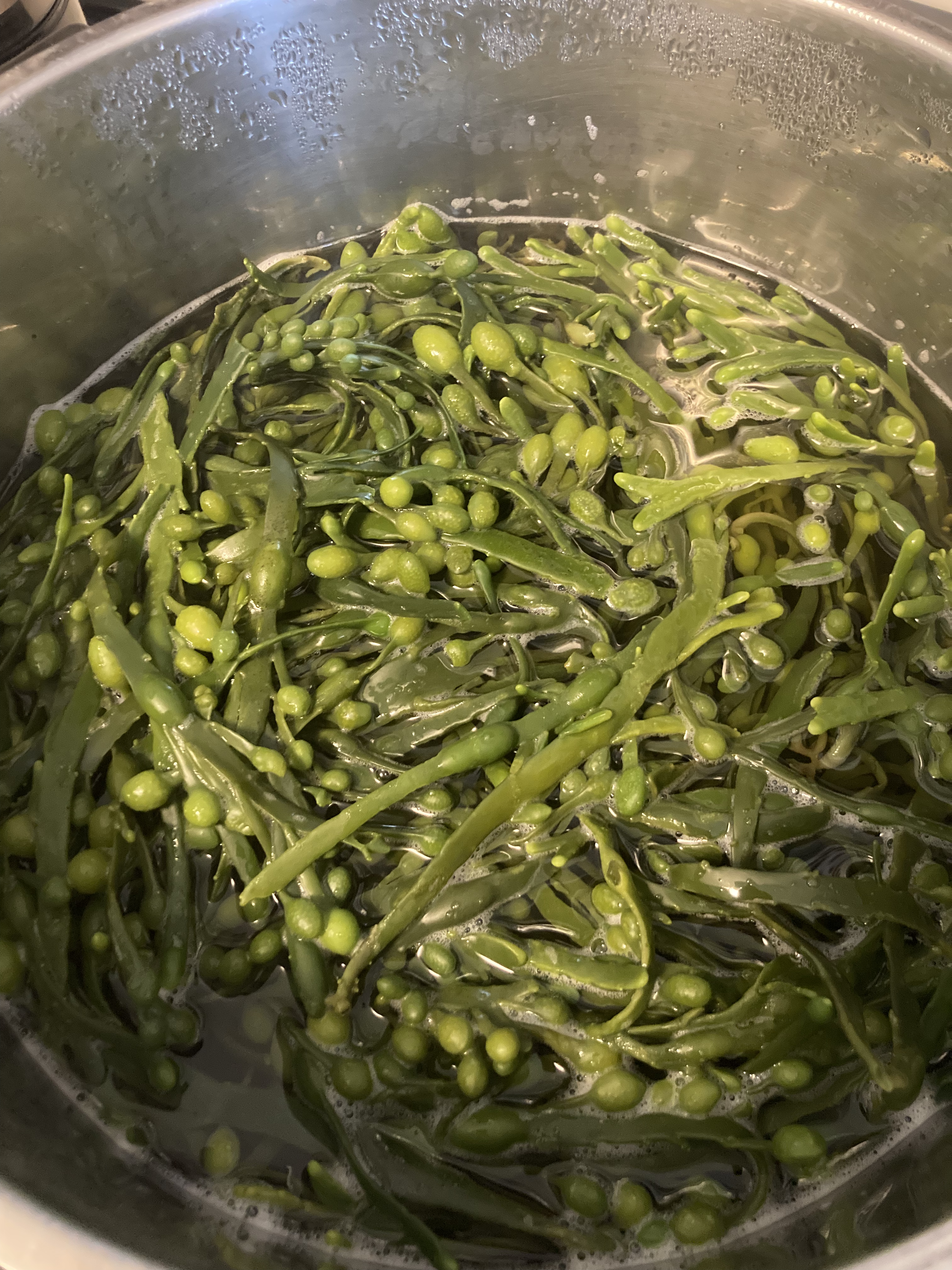
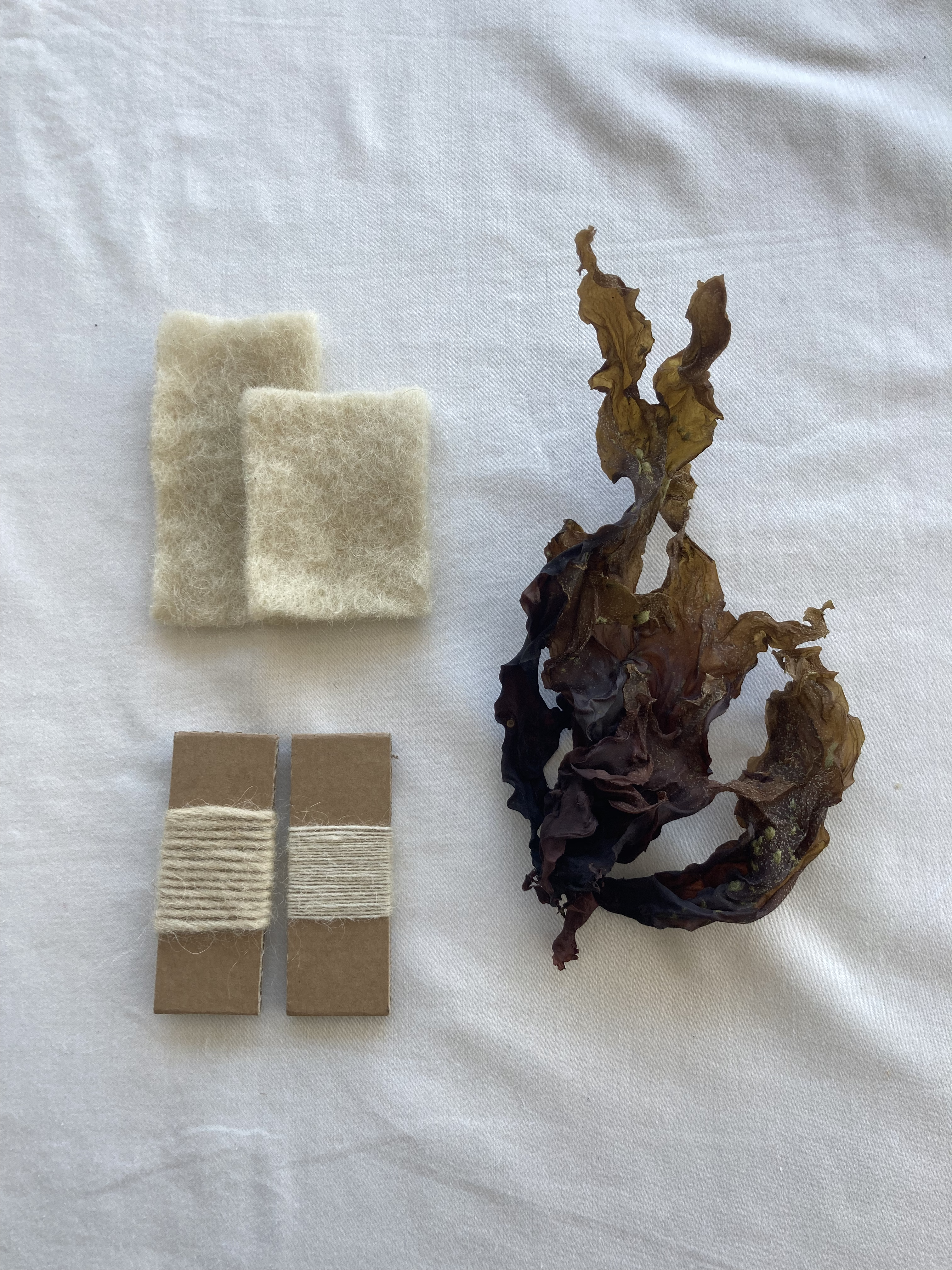
Upon arrival in Blönduós, the first stage of the work involved foraging along the shoreline for local seaweed, including kelp, knotted wrack, bladderwrack, and dulse. This material exploration formed the basis for an initial investigation into natural dyeing processes using Icelandic wool in multiple forms - yarn, fleece, and felt. Different seaweed species and combinations were tested, revealing that the natural tannin content in the seaweed eliminated the need for chemical mordants. A color palette was developed and samples were prepared in the Textile Center's TextílLab. Alongside, Bilge began hand-weaving on a frame loom, carded and spun dyed fleece into chunky yarn for tapestry work, and later completed a scarf using a hand-knitting machine. The resulting woven and knitted pieces featured layered gradients of natural, earthy tones that complemented the wool’s texture.
Bilge also conducted experiments with biomaterials, specifically investigating sodium alginate derived from brown seaweed. While initial attempts using kelp were unsuccessful, bladderwrack proved more promising. During the dyeing process, a gel-like substance was observed within the seaweed’s air vesicles. This material was extracted and, after the application of a curing solution, successfully gelled - confirming the presence and usability of naturally sourced alginate.
Overall, the residency enabled extensive experimentation across textile processes and biomaterial development. Bilge also connected with fellow May artists in residence from all around the world - Linda Rataj, Kasia Kolikow, Yunchien Lee, Annelise Box, and Jean Mandeberg - and participated in other residency activities, such as visits to the local Wool Washery and Textile Museum.
What stood out for us was the value of a short, varied exchange with a multidisciplinary designer with an industrial product design background, and seeing how she integrated and engaged with the wider group of textile artists. The exchange also clearly highlights the value of residencies, stepping into new crafts and techniques, and being exposed to unfamiliar methods, tools, and facilities as a catalyst for creative development.